Continuing Professional Development (CPD) is a fundamental requirement for registered physiotherapists in Australia. The Physiotherapy Board of Australia mandates that all practicing physiotherapists complete a minimum of 20 hours of CPD annually to maintain registration. The primary objective of CPD is to ensure physiotherapists stay updated with best practices, clinical advancements, and professional standards.
Thank you for reading this post, don't forget to subscribe!What is CPD?
Continuing Professional Development (CPD) refers to structured learning activities that enhance the skills, knowledge, and skills of physiotherapists. The CPD framework ensures that practitioners continually improve their competence within their specific scope of practice. CPD may include formal and informal learning activities such as accredited PD courses, online physiotherapy CPD courses, workshops, peer reviews, and research studies.
The Physiotherapy Board of Australia requires all physiotherapists (except those with non-practicing registration) to maintain a CPD portfolio documenting their learning aims, activities, and reflections.
Wha is a CPD Point?
CPD points quantify the hours spent on professional development activities. In Australia, one CPD point is typically equivalent to one learning hour. Physiotherapists must complete at least 20 CPD hours per year, which can be earned through various activities, including physiotherapy CPD courses Australia-wide.
CPD activities must be relevant to the physiotherapist’s practice and contribute to improving patient outcomes. Points can be accumulated through self-directed learning, structured workshops, clinical practice improvement, and interactive discussions.
Why Does AHPRA Conduct CPD Audits?
The Australian Health Practitioner Regulation Agency (AHPRA) conducts periodic CPD audits to verify compliance. The purpose of these audits is to:
- Ensure physiotherapists adhere to national competency standards.
- Maintain high-quality healthcare services.
- Encourage professionals to continuously update their knowledge and clinical skills.
Physiotherapists must retain CPD records for at least four years, documenting their learning objectives, participation, and outcomes.
How to Earn CPD Points?
Physiotherapists can meet their CPD requirements through diverse learning methods, including:
- Online CPD Physiotherapy Courses – Digital learning platforms provide flexibility and accessibility to a variety of physio CPD courses.
- Workshops & Seminars – Attending industry conferences enhances practical knowledge and clinical skills.
- Self-Directed Study – Reading journals, case studies, and research articles contributes to non-formal CPD points.
- Clinical Research & Peer Discussions – Engaging in collaborative learning helps practitioners refine their clinical decision-making skills.
- Accredited PD Courses – Specialized PD courses in areas such as manual therapy, musculoskeletal rehabilitation, and neurological physiotherapy provide structured CPD hours.
Approved Physiotherapy CPD Learning Activities
The Physiotherapy Board of Australia recognizes both formal and non-formal learning activities, including:
Formal CPD Activities:
- University-accredited degree programs.
- Participation in interactive online physiotherapy CPD courses.
- Research presentations and journal article publications.
- Attendance at physiotherapy CPD courses Australia conferences and networking events.
Non-Formal CPD Activities:
- Engaging in peer reviews and mentoring programs.
- Reflective practice and clinical audits.
- Active participation in professional committees and discussion forums.
How to Record and Maintain CPD Compliance
Physiotherapists must maintain an updated CPD portfolio that includes:
- Learning Objectives: Define professional development goals.
- Activity Documentation: Record participation in physio courses, online CPD physiotherapy courses, and practical workshops.
- Reflection & Outcomes: Assess how CPD activities contribute to improved clinical practice and patient care.
A structured CPD portfolio template is available from the Physiotherapy Board of Australia website, allowing practitioners to systematically track their progress.
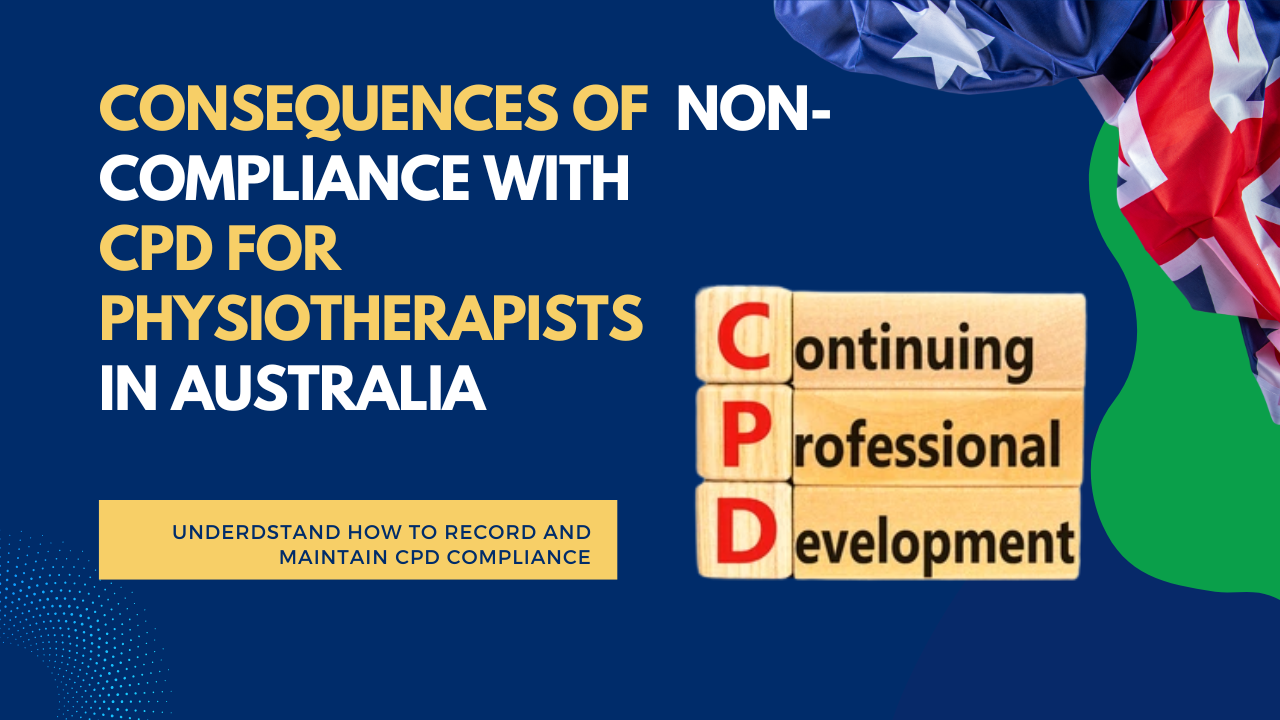
Consequences of Non-Compliance with CPD Requirements
Failure to meet CPD requirements can result in regulatory action, including:
- Additional CPD training or supervised practice.
- Restrictions or conditions on physiotherapy registration.
- Potential disciplinary proceedings by AHPRA.
Physiotherapists are encouraged to proactively manage their CPD obligations to maintain professional competency and compliance.
Our Musculoskeletal Physiotherapy Course
Physiomates offers specialized courses designed to enhance the skills and knowledge of physiotherapists, aligning with Australian healthcare standards. Below is a comprehensive overview of our key programs:
- Advancing Musculoskeletal Physiotherapy Clinical Practice
This program is tailored to bridge the gap between theoretical knowledge and practical application in musculoskeletal care. Led by Mustufa Kagdi, a Titled APA Musculoskeletal and Sports & Exercise Physiotherapist with nearly two decades of experience, the course focuses on:
- Evidence-Based Decision Making: Equipping physiotherapists with the ability to apply the latest research to complex clinical cases.
- Patient Communication: Enhancing skills to effectively educate and engage patients in their treatment plans.
- Clinical Reasoning: Developing advanced problem-solving skills for accurate diagnosis and treatment.
- Legal Documentation: Understanding professional documentation standards, including AHPRA and NDIS compliance.
- Multidisciplinary Collaboration: Promoting approaches that involve various healthcare professionals for comprehensive patient care.
The curriculum includes modules on the biopsychosocial approach, clinical patterns recognition, management of specific conditions like low back pain and osteoarthritis, and the integration of pain neuroscience education into practice. This course is ideal for physiotherapists aiming to elevate their musculoskeletal practice within the Australian healthcare context.
- Comprehensive Understanding of the Biopsychosocial Model
This course delves into the integration of biological, psychological, and social factors in patient care, emphasizing a holistic approach to rehabilitation. Participants will learn:
- Core Principles: Understanding how various factors influence patient health and recovery.
- Addressing Psychosocial Barriers: Identifying and managing psychological and social obstacles that may hinder rehabilitation.
- Practical Implementation: Strategies to incorporate the biopsychosocial model into daily clinical practice.
- Case Studies: Analyzing real-world scenarios to illustrate effective holistic patient management.
This course is essential for physiotherapists seeking to enhance patient outcomes through a
By enrolling in these programs, physiotherapists can fulfill their Continuing Professional Development (CPD) requirements while enhancing their clinical skills and aligning their practice with Australian standards.
Conclusion
Meeting CPD requirements is essential for every practicing physiotherapist in Australia. By enrolling in online CPD physiotherapy courses, engaging in structured learning, and maintaining accurate records, physiotherapists can stay compliant with AHPRA regulations and enhance their professional skills.
Frequently Asked Questions (FAQ)
1. What are the CPD requirements for physiotherapists in Australia?
In Australia, physiotherapists must complete at least 20 hours of continuing professional development (CPD) annually to maintain their registration with the Australian Health Practitioner Regulation Agency (AHPRA). This can include structured learning, mentoring, practical workshops, and online courses. Learn more about CPD requirements here.
2. What types of physiotherapy courses does Physiomates offer?
Physiomates provides a variety of CPD-approved courses designed for physiotherapists at all career stages. Our courses include:
- Musculoskeletal (msk) clinical mentoring program – A hands-on, mentorship program for physiotherapists.
- Hands-on physiotherapy courses – Practical training to enhance manual therapy and treatment techniques.
- Advanced CPD courses – Covering specialized physiotherapy techniques and rehabilitation strategies.
Explore our full range of Physiotherapy CPD Courses here.
3. Are the courses accredited for CPD points?
Yes! Our courses align with AHPRA’s CPD requirements and contribute to your annual CPD hours needed for physiotherapy registration.
4. Who are these courses suitable for?
Our courses are designed for:
- Registered physiotherapists looking to meet CPD requirements.
- New graduates wanting to enhance their clinical skills.
- Experienced practitioners seeking advanced hands-on techniques and mentoring.
5. How do I enroll in a physiotherapy cpd course?
You can browse our courses and enroll online via our website:
Physiomates Physiotherapy CPD Courses