Imagine opening one tab for salaries, another for registration and a third for visas. An hour later, you have plenty of information about physiotherapy jobs abroad, but still cannot picture which route is right for you.
Most advice gives you separate pieces. It rarely connects those pieces to your qualification, budget and career goals.
At Physiomates, we suggest working through the decision in order: the career you want, the opportunities available and the pathway your qualification allows. By the end of this guide, you should be able to shortlist two countries, identify what you still need to check and choose one useful next step.
1. Which country could support the career you want?
Before comparing destinations, consider what you want your move to change. Perhaps you want financial independence, stronger clinical mentoring or somewhere to settle with your family. Knowing your priority makes a long list of countries easier to narrow down.
The best countries for physiotherapy jobs in 2026 to explore include Australia, New Zealand, the UK, Canada, the USA and Ireland. The table gives you a starting point, but your decision should come from how these opportunities fit your circumstances.
Physiotherapist salary by country
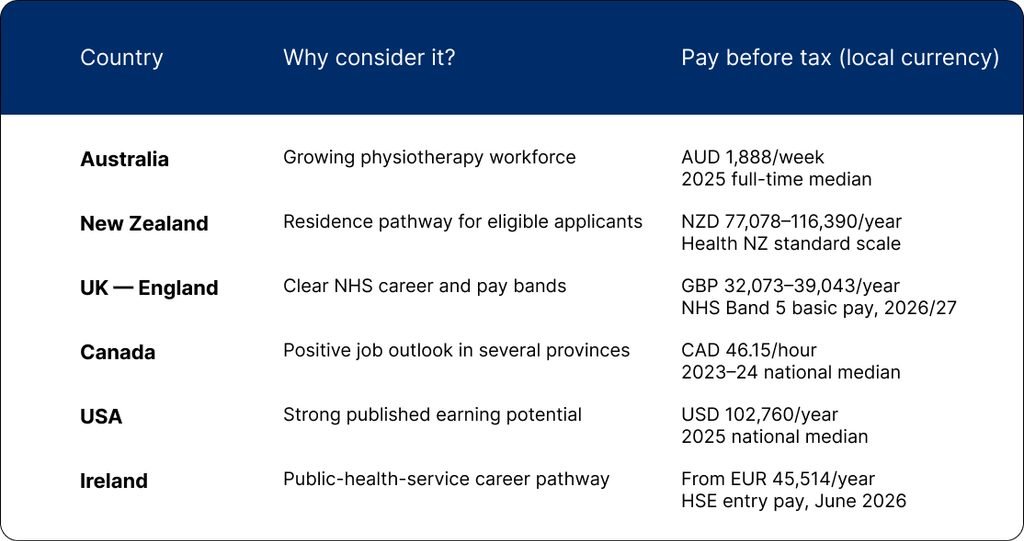
If earning potential leads your search, Australia and the USA deserve attention. But compare the salary you could realistically be offered: a national median includes experienced clinicians and is not a promise of graduate pay.
If a clear public-sector career structure appeals to you, explore the UK and Ireland. Published pay scales help you understand the role you are entering and the responsibilities associated with progression.
If long-term settlement matters most, look closely at New Zealand. Its Straight to Residence route can suit eligible physiotherapists with a qualifying job, but registration, employer and other immigration requirements still apply. If you already have family support in Canada, include that practical advantage alongside the province’s registration requirements.
It is natural to notice the highest paying countries for physiotherapists first. However, an attractive salary becomes meaningful only when you know what remains after local expenses.
For example, imagine one Australian job leaves you with AUD $400 more take-home pay each month, but living near it costs AUD $600 more in rent. You would have AUD $200 less available before other differences. This is why we encourage you to compare a monthly budget, rather than simply convert a salary into rupees.
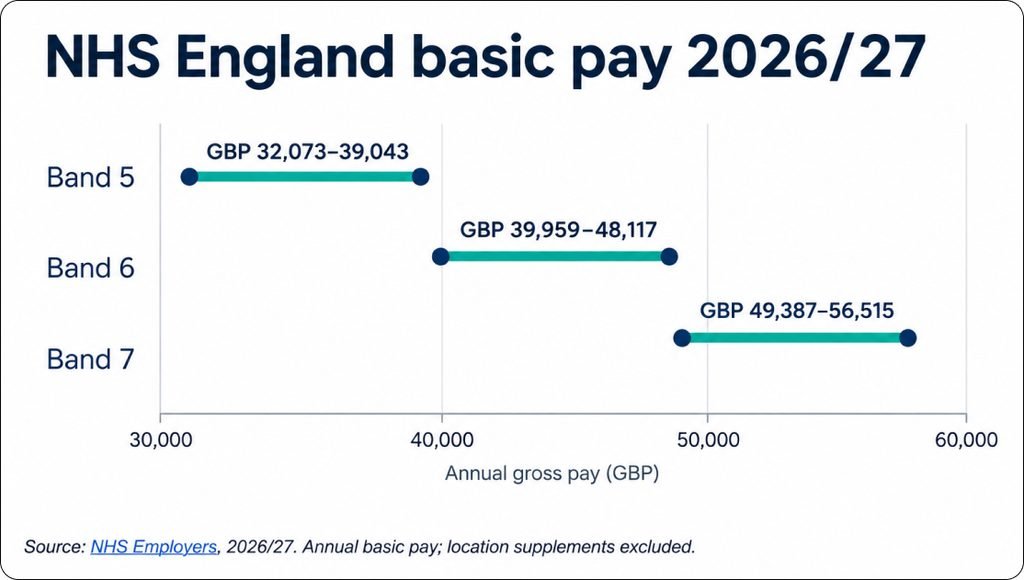
Once the first-year budget works, consider where the role could take you. If you want to specialise, ask about supervision, training and opportunities to take on more responsibility. England’s NHS illustrates how those responsibilities connect with pay.
2. Will you find the kind of work you want?
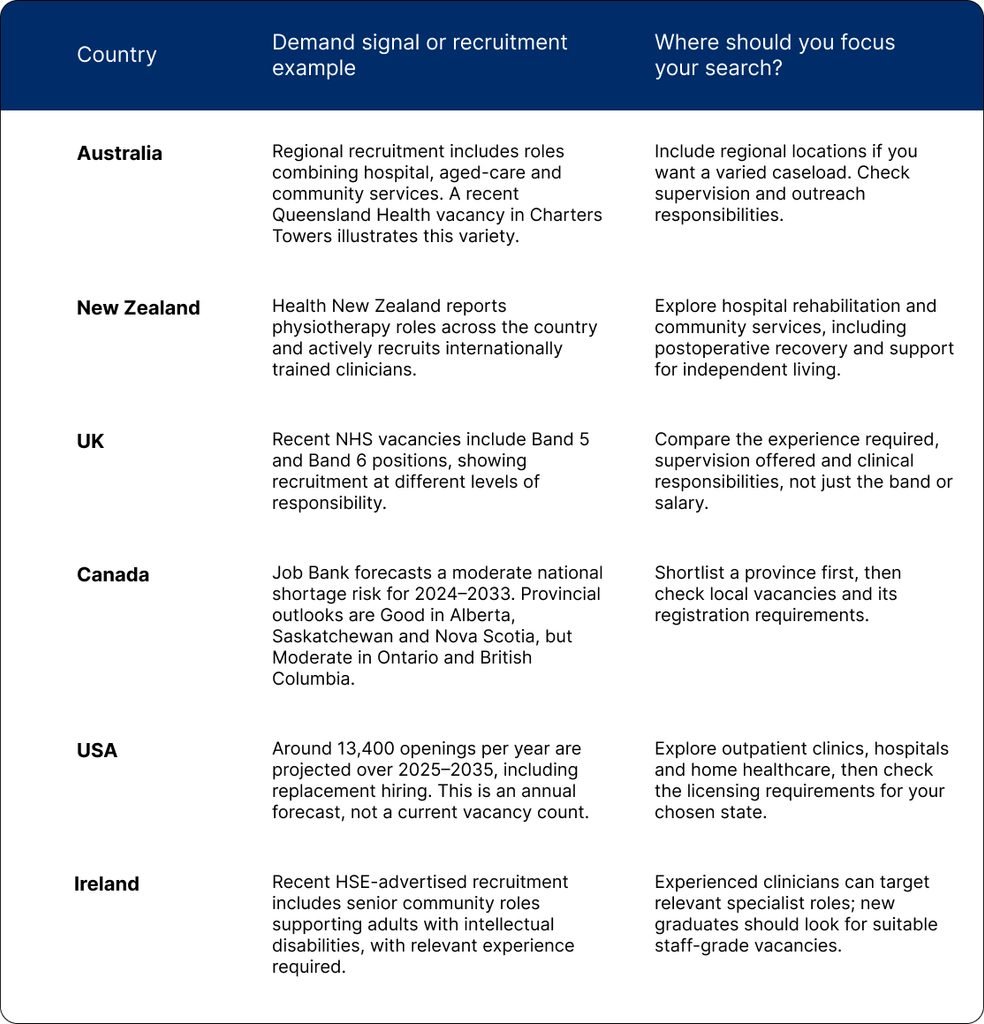
A country may look affordable, but you also need a job that fits your experience. Looking at countries with high demand for physiotherapists helps you identify where opportunities may grow. Australia and the USA both project an expanding physiotherapy workforce.

Physiotherapy Job Market Demand by Country in 2026
When comparing countries with high demand for physiotherapists, look at both workforce forecasts and recruitment examples. Forecasts describe longer-term need; advertisements show what a particular employer needs now. Both help you decide where to investigate suitable roles.
Now bring that national picture down to your own career. When searching for physiotherapy jobs overseas, read five advertisements in each of two shortlisted countries. Look for the setting, experience, registration status and responsibilities they request.
A new graduate interested in neurological rehabilitation might value hospital rotations and regular supervision. A clinician with several years in musculoskeletal practice may want a role that develops their existing expertise. Both could choose the same country, but they should be looking for different jobs.
The best countries to work as a physiotherapist are those where you can find a realistic next role. But even a suitable vacancy will usually ask for professional registration, so your next question is whether you can meet that requirement.
3. Will your qualification let you practise there?
Registration is the professional approval that allows you to practise. Your degree is the starting point, but the destination’s regulator decides whether your education and supporting evidence meet its standards. A friend’s successful application can offer encouragement, without proving that your route will be identical.
Australia: Identify the applicable assessment or recognition pathway, then the requirements for Physiotherapy Board registration through Ahpra. Physiomates’ Australian registration guidance can help you frame the questions to check against the regulator’s current rules.
The UK and New Zealand: Start with the Health and Care Professions Council (HCPC) or the Physiotherapy Board of New Zealand. Explore our HCPC registration guidance or New Zealand registration support to understand where personalised guidance could help.
Canada, the USA and Ireland: Begin with your chosen Canadian province, US state board or Ireland’s regulator, CORU. For Ireland, overseas qualification recognition comes before registration.
Before planning applications for physiotherapist jobs abroad, check three things:
- How is your qualification assessed?
- Which documents and language evidence are required?
- Are additional assessments or further training required?
For example, a certificate may confirm that you graduated, while a transcript and placement records show what you studied and your clinical exposure. If those records are incomplete, requesting them from your university now may prevent avoidable delays later.
If you are newly qualified, do not assume you must immediately enrol in a master’s degree. First establish what your existing qualification allows you to apply for. If you are experienced, check how that experience must be evidenced; years in practice do not replace the registration process.
Before asking for guidance, write down your training country, qualification, graduation year, current registration and clinical experience. Then use our international registration guidance to identify the questions specific to your preferred destination. This gives you a useful starting point for a focused discussion.
4. Can you afford the pathway and plan a realistic timeline?
Once you know the route, work out what you would need to fund before your first salary. Use the regulator’s current fees and actual living costs for your chosen location, then separate your budget into three parts.
Qualification and registration: document certification or translation, language testing where required, assessments and registration fees. Check when each payment becomes due.
Preparation and relocation: any teaching or practice resources you choose, visa charges, travel, temporary accommodation and a rental deposit. Keep education-provider fees separate from regulatory fees.
Time before you earn: living expenses and any income you may lose while preparing. Someone studying alongside work and a graduate preparing full-time may need different savings plans even when following the same route.
Next, turn the requirements into milestones: documents ready, required assessments completed, registration approved, and suitable employment and work permission arranged. Some activities can overlap, but use current processing times and assessment availability before setting a moving date.
When reviewing physiotherapist jobs for foreigners, ask whether the employer considers applicants at your registration stage and offers visa sponsorship. Registration, employment and immigration are separate decisions; an employer’s interest does not settle all three.
New Zealand illustrates why these checks matter. Its Straight to Residence requirements cover the job, employer, registration and personal criteria. Confirm those conditions before relying on residence as part of your plan.
With costs and milestones written down, you can see whether to begin now or allow more time to save and prepare. You can also focus your learning on the clinical skills your next role will require.
5. Build confidence for the work you are moving towards
You may have the right documents and still wonder, “Will I feel confident working in a different healthcare system?” That is a useful question to address while you prepare. Employers and patients need you to explain decisions, adapt to unfamiliar presentations and communicate clearly.
Consider two people with knee pain. One wants to return to running, while the other wants to manage the stairs at home. Remembering an exercise list is helpful, but their goals require you to think about assessment priorities, treatment choices and how you will explain the plan.
After reviewing a case, explain three things aloud: what matters most to the patient, why you would choose your next step and what could change your plan. If you can recall the facts but cannot explain the decision, you have found a useful learning gap.
Explore Physiomates’ clinical reasoning and patient communication courses to work on that gap through case studies and clearer explanations of diagnosis and treatment plans. Choose a topic connected to your next role, then apply what you learn to a fresh case.
Preparing for Australia? Here’s your starting point
Once you have confirmed which assessments your Australian pathway requires, you can choose preparation that fits. If you are working towards the Written Assessment, begin by finding out where your reasoning needs practice.
PhysioPrep AI provides case-based questions across musculoskeletal, neurological and cardiorespiratory topics, with explanations, mock assessments and progress tracking. Use these features to decide what to study next.
For example, you may answer musculoskeletal cases confidently but struggle to prioritise information in cardiorespiratory cases. Review the explanation, write down what you missed, then try a different case. This helps you check whether you understand the reasoning beyond the original answer.
During your first week, identify recurring gaps. In the second, revisit them through unfamiliar cases and review your progress. You will have a clearer picture of what you can practise independently and where educator feedback could help.
Start your 14-day free PhysioPrep AI trial . The trial is for new users. A paid recurring subscription follows unless cancelled before the trial ends; trial and renewal terms apply.
Need a structured plan for Written and Capability?
If your pathway includes both assessments and you want guided teaching and feedback, PACE Global combines preparation for the APC Written and Capability Assessments. Case-based learning and educator mentoring connect selecting an appropriate response with explaining and justifying your clinical reasoning.
The upfront programme price is AUD $3,500. You can begin accessing initial learning modules immediately with an AUD $200 registration payment, credited towards the programme fee. Instalment plans have a different total price; regulatory assessment and registration fees are separate.
Share your target assessment stage, current preparation and work or study commitments so the team can discuss whether the programme fits your needs.
Make one useful decision this week
Choose two countries, save three suitable vacancies in each and note the registration requirement you cannot yet resolve. If you are still studying, add the documents you will need after graduation. If you are practising, include the experience and skills you want your next role to build on.
Book a Physiomates pathway guidance call and bring your shortlist, qualification details and biggest unanswered question. Use the conversation to clarify the route you need to investigate, the evidence to gather and the preparation to prioritise.